Traffic Accidents and Air Pollution: An Analytical Interview on Bidirectional Impacts and Environmental Harm
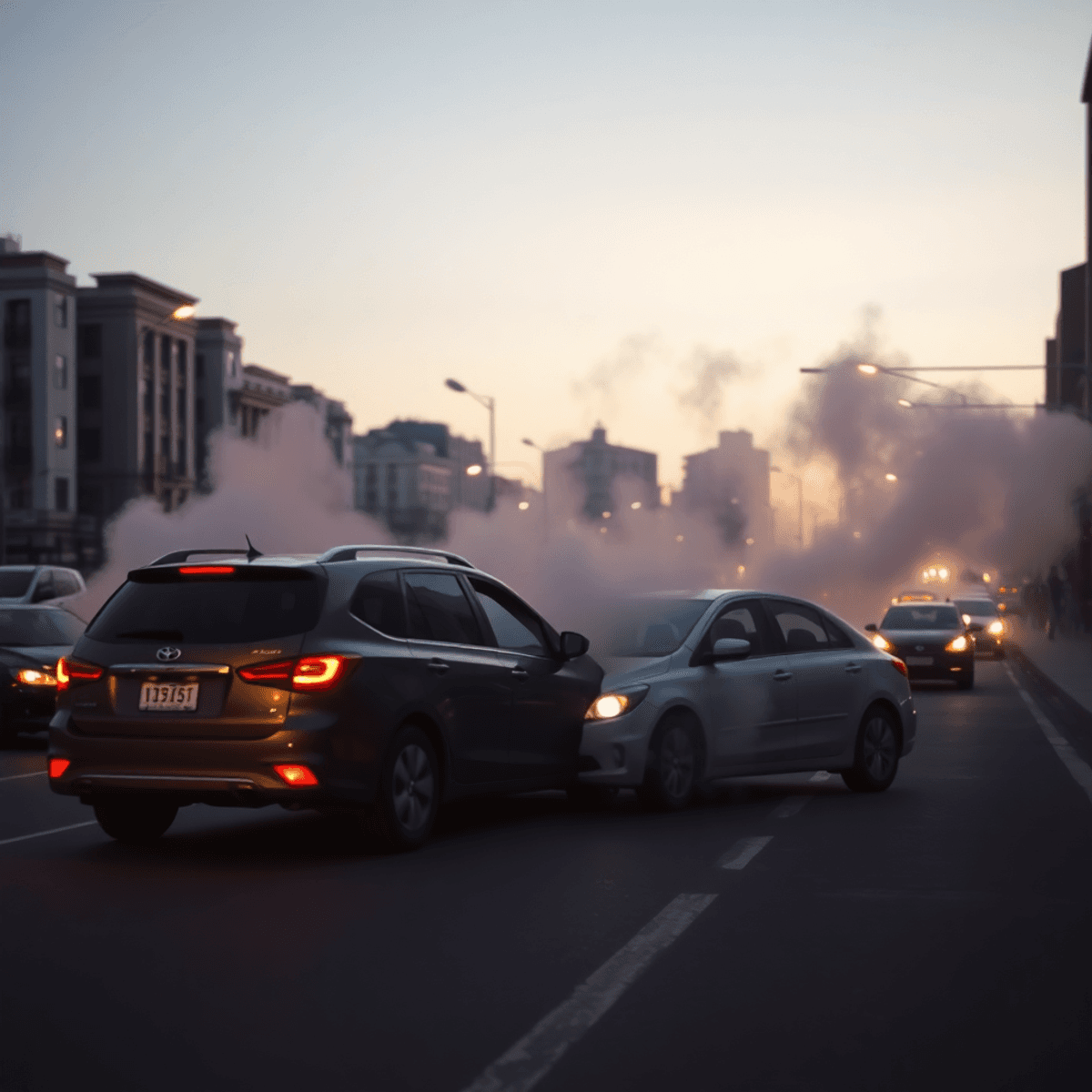
Establishing the Interplay Between Traffic Accidents and Atmospheric Pollution
The way transportation, city growth, and the environment are connected can be hard to sort out. The link between them has many parts. Car and truck crashes are a big deal in this system. The effects go far beyond people getting hurt or things getting broken. A crash often causes problems that spread to the environment. This can change the air around us. When cars get damaged, and things inside them break, many harmful things can get into the air nearby or farther out. This adds a lot of bad stuff to the air and makes pollution worse.
When vehicles crash, they release things like oil, fuel, and other dangerous materials into the air. This can make the air quality worse. Also, when accidents block traffic, cars stay running on the road for a long time. This makes more greenhouse gases and adds to air pollution from roads. A big part of the pollution that comes after an accident on the road is often not talked about enough in the transport industry.
To understand this, you have to look at both direct pollutant releases and the effects they have on air quality numbers. There is harm from traffic accidents right away. But these crashes also let out a lot of pollutants into the air. This makes the environment worse for all of us. The customer journey in the social media campaign can show us how what people think and know about these problems can change.
Thesis and Significance of Bidirectional Impacts of Traffic Accidents and Air Pollution
This document looks at how traffic accidents and air pollution affect each other. It says that traffic accidents give off bad stuff into the air. Accidents also happen more often and get worse when air quality is bad. When cars are damaged or when people respond to these events, they add more pollution to the air. Bad air makes it hard to see and can make drivers less sharp, so more accidents happen.
Understanding how these things link together is key if we want to make better rules about the environment. It also helps us think about ways to plan cities and to keep people healthy. We need to know how this loop works if we want to manage travel better and care for our cities.
Also, knowing how cars and the car industry hurt the air is needed if we want to make good plans. These plans should help with the ways that both traffic accidents and air pollution affect each other.
Release of Pollutants: Fuels, Oils, and Chemical Leakage
Traffic accidents often break the safety parts of the vehicle. This can make harmful liquids leak out when they are meant to stay inside. A common example of this is gasoline or diesel, as both are made from oil. When they spill, they quickly put harmful vapors into the air. Engine oils, fluids from the gears, and coolants can also spill. These are not as quick to turn into gas, but they still have chemicals and metals. They can get into the air as tiny drops or through floating gases. This adds to particulate matter (PM) and makes more bad air near the ground.
These leaks also make volatile organic compounds (VOCs), nitrogen oxides (NOx), sulfur oxides (SOx), carbon monoxide (CO), sulfur dioxide (SO2), and pieces of unburned fuel. All of these can build up and make more types of air pollution.
After an accident, these bad chemicals get into the air fast. There is usually nothing holding them back, so the wind or air can spread them out quickly.
Particulate Matter and Debris: Tire Fragments, Brake Dust, and Glass
Physical destruction in traffic accidents makes a lot of small particles and dust go into the air. When cars crash, the tires rub hard against the road and make microplastic bits and rubber dust. Emergency braking, right before impact, throws off metal particles and other stuff called brake dust. This dust is easy for people to breathe in.
Broken glass from windows and windshields turns into little pieces it can also go into the air and adds to the dust. When the car body breaks, plastics, paints, and other materials turn into fine dust with toxins. All these small parts that break off in a crash lead straight to more dust and particles in the air.
2.5 and PM 10
In addition to particles in the air, car crashes add to noise pollution. These crashes make loud sounds when the cars hit each other and as the vehicles move around after. The loud noise in the area can affect the environment in several ways. It may disturb animals living in the area. It can also raise stress for people who live close by.
Furthermore, the shaking made during a crash can change the surrounding area by causing soil displacement and hurting structures close by. These shaking effects can make the ground less stable and can harm plants that are close to the area.
concentrations of environmental contaminants from vehicles, posing respiratory health risks.Hazardous Materials Spills: Environmental and Public Health Risks
Accidents that involve commercial vehicles or special transport trucks sometimes let out very dangerous substances. This does not happen often, but when it does, it causes more harm to people and the environment than usual crashes. Trucks carrying chemical tanks, industrial waste, or even household chemicals in big amounts can break open. This can let out toxic gases, harmful liquids, or unsafe solid materials into the air and ground nearby. These dangerous releases make people have to leave the area fast. Fire and rescue teams need special rules to stop more trouble. People close to the crash can have trouble breathing from the air, and the environment can be hurt for a long time after. The wind can also move these harmful materials far away from where the accident happened, putting other people and animals at risk also. Laws like the Hazardous Materials Transportation Act (HMTA) help keep the move of these materials as safe as possible to lower these risks.
Existing Regulatory and Mitigation Frameworks
Current rules mostly aim to stop accidents from happening. They use things like car safety checks, good road design, and teaching drivers. Still, there are not many rules that focus on what happens to the air after an accident, compared to rules for cleaning up the ground and water.
When an accident happens, the focus is usually on helping people, moving the cars, and clearing up the road. Cleaning the air right where the accident happened is not always the main thing. Sometimes, it is just part of a bigger plan for handling dangerous spills.
Laws such as the Clean Air Act in the United States set limits to keep air clean for everyone. Still, these laws do not clearly set rules just for pollution from crashes or ask for special ways to fix it.
Around the world, different countries have rules for moving dangerous stuff and what to do in emergencies. These give advice on how to keep things safe and act fast if there is a spill. But, a special set of rules to check and fix air problems after accidents is still being worked on.
Intelligent Transportation Systems (ITS) and smart traffic control systems help a lot to stop accidents and cut down on pollution when there is a traffic incident. These systems make traffic flow better and give real-time updates to drivers. This can help keep cars moving, which means there are fewer jams and less pollution from cars sitting still.
ITS also helps emergency teams reach places faster by finding the best routes for them. It makes sure that other ways to get where you need to go are open when something happens on the roads. This way of working keeps the roads safer and also helps lower the number of harmful gases that go into the air after an accident.
Impact of Fine Particulate Matter (PM2.5) on Driver Cognition and Performance
The air around us can affect how our bodies and minds work. This can be seen in how safe we drive on the road. Small bits in the air, called fine particulate matter or PM, are a big part of this.
2.5
(particulate matter with an aerodynamic diameter less than 2.5 micrometers) can get deep into the breathing system. It can go into the blood. This can change heart and brain systems. Studies show that high PM levels can cause this.
2.5
These levels are linked to lower thinking skills. This can mean you do not pay attention as well, answer more slowly, and your mind does not work as well overall.
Other related pollutants also have big roles in how a driver thinks while on the road. For example, PM10 is a kind of very small dust that can get into a person’s lungs. It can hurt breathing and has been linked to issues with how the mind works. PM10 can bother the lungs a lot, and it can move into the blood.
Also, nitrogen oxides (NOx) that come from car exhaust and work sites, can make air quality bad. It can change how the brain works by stopping neurotransmitters, and in this way, it hurts thinking skills.
The mix of these pollutants—PM2.5, PM10, and NOx—makes an environment that can really hurt a driver's focus. It can make it hard for people to think fast, make choices, and act the right way when the road changes.
Visibility Impairment: Smog, Fog, and Accident Risk
Air pollution makes it hard for people to see while driving. Smog and fog block the view, so you may not see cars, dangers, or traffic lights. This makes it harder to notice things in time, and you have less time to act. It also takes up more of your attention. Because of this, mistakes and crashes can happen. These problems are more common on fast roads, where there can be more big pile-ups and serious crashes.
Epidemiological Correlations Between Pollution Levels and Accident Frequency
Many studies show there is a link between more air pollution and a higher number of traffic accidents. When people look at a lot of the data, they often find a connection between the average amount of things like PM 2.5, PM 10, NO 2, and O3 in the air each day or hour and other things like greenhouse gas, carbon, and carbon dioxide from using energy. This means that places with more pollution can have more accidents. It also shows that there is a bigger effect of harm to the environment on how safe the roads are.
Feedback Loops: Traffic Accidents as Both Cause and Consequence of Air Pollution
The way traffic accidents and air pollution affect each other is a loop that keeps going. At first, bad air quality, because of things like less visibility and unclear thinking, makes traffic crashes more likely and more serious. After that, these crashes add more pollution to the air when fuels, chemicals, and small bits are released. The extra air pollution can then make things even harder for other people on the road, so the risk keeps going up for both safety and the environment. Also, when accidents cause traffic jams, cars have to idle or drive extra slow, which creates even more pollution. This shows how both the air and road safety problems feed off each other, making it tough to solve both issues at the same time.
Switching to Electric Vehicles (EVs), plug-in hybrid electric vehicles (PHEVs), and cars that run only on power can help stop the bad cycles we see now. These cars let out less pollution when people drive them in normal times or if there are crashes. That means the air will be less hurt by those accidents. Also, when governments push people to buy EVs and PHEVs, more people get these cars. This helps make our roads filled with cars that are better for the environment.
Integration of these technologies into smart city infrastructure is also important. Smart traffic management systems can help make traffic move better and cut down jams. This means cars do not sit still as much, which helps lower the amount of bad air. Air quality monitoring in these systems can help drivers know more and feel safer. It can also help cut down on accidents that happen when people cannot see well or think clearly because of pollution.
In short, when people start using electric cars, support from the government, and smart city planning all work together, they can break the cycle between car crashes and dirty air. This can help us have safer roads and cleaner air.
Long-Term Environmental Degradation and Urban Air Quality
Each car crash adds a small amount to air pollution. When you put all of these events together, they add up over time, especially in big cities with a lot of cars. This can lead to a steady decline in the environment. Tire pieces, brake dust, and metal bits from the road get into the air and the nearby land. These things also end up in the soil and water, and can go back into the air later. The chemicals that come out during crashes can mix with things already in the air. Over time, this makes new, harmful things in the air, like haze and smog in cities. A steady flow of different pollutants from accidents makes it hard to get and keep clean air in cities. This is a big problem for both people’s health and the ways we try to take care of our environment.
As more cities use new energy vehicles (NEVs) to help clean the air, there are some things about NEVs that can change how well they work over time. For one, NEVs do not make any pollution from their tailpipes. But making batteries for these cars can still hurt the environment. This happens when raw materials are taken from the ground and when a lot of energy is used to build the batteries. There are also some shortfalls in how batteries work, and this can make a difference in how long these cars last and how well they use energy. Because of these issues, NEVs can sometimes make more pollution over their whole life than normal cars that run with gas.
Building more places to charge cars is a big issue. If there are not enough charging spots, people may not want to use NEVs. They might just keep using cars that run on oil. A lot of people feel nervous that their car may not make it to where they want to go before it runs out of power. Because of this, they often pick cars that are not as good for the earth. These cars are easier to find, and people feel they can count on them.
Moreover, we cannot ignore the bigger effect the car industry has. When more NEVs are made, there is also a rise in the need for electricity. This makes us ask about where the energy comes from. If the power is made by burning coal or from other polluting industries, then the overall air in the city may not get better.
To sum up, NEVs can help cut down on air pollution in cities. But, how well they work depends on making better batteries, having good charging places, and thinking about all the energy that goes into making and using cars.
Challenges for Emergency Response and Public Health Systems
Traffic accidents that let out a lot of pollution make things very tough for all emergency workers and for public health. The people who get there first have to deal with dangers from harmful chemicals when they help others or clean up. There is a need for special gear and rules to hold back dangerous stuff in the air. This makes the job harder and can cost more time and money. Tools like ICT and ITS can help emergency teams. These tools give up-to-date traffic info, help teams get to the spot faster, and make sure different people work well together.
Public health teams have to deal with possible short-term effects from people breathing in dangerous substances. These can be problems like trouble with breathing or even poisoning, depending on what was in the air. Over a longer time, health workers may need to keep watching people’s health to find any lasting problems from being around these harmful things after an accident. When accidents block roads, it gets harder for emergency teams to get to people. This can slow down important medical help and make things worse for those hurt in the accident.
By using ICT and ITS tools, emergency teams can do a better job when accident air pollution happens. This helps them act faster and talk clearly with everyone about what to do to stay safe.
Socioeconomic and Regulatory Considerations
The combined problems with traffic accidents and air pollution put big costs on people and communities. There are expenses like healthcare for those hurt in crashes and people who get sick from dirty air. Lost time, broken roads, and the cleanup work after all add more costs. A good example is how more people get sick with breathing or heart trouble when air is bad, leading to higher healthcare bills.
Rules often look at car pollution and road safety on their own, so there are gaps in what these laws cover. Policies that bring it all together would be better. These should look at every part of how cars are used, especially what happens in accidents and how they impact our world.
Setting up rewards for using safer cars and cleaner fuels helps. Making rules stricter around dangerous goods is another way to help. At the same time, the government should think about giving tax breaks or help to people getting cleaner cars. This financial support makes it easier for more people to buy low-emission cars. By doing this, governments can lower the harms from both vehicle accidents and the bad air caused by cars.
Synthesis of Findings and Bidirectional Risks
This study shows that there is a two-way link between traffic accidents and air pollution. Both affect each other. When traffic accidents happen, they put more fuels, oils, car parts, and harmful chemicals into the air. This makes the air dirty and unhealthy. Bad air, like having too much [PM, can also lead to more traffic incidents atmospheric contamination 2.5]
(https://pmc.ncbi.nlm.nih.gov/articles/PMC8617239/)
This study points out how much these actions hurt the environment. It shows there is a need for good urban air quality management strategies that deal with both traffic safety and cutting down pollution.
Poor road conditions and bad weather can make it hard for drivers to think clearly. It gets tough to see, and this can lead to more accidents. These issues keep happening and often get worse because each one makes the other harder to fix. This hurts the larger environment and puts more people in danger. When these things come together, there is a big risk for public health and the world around us, not just in the place where an accident happens.
Here are some ideas for making rules and changes that work well for everyone.
To solve these connected problems, we need to try several things at once. We should focus on making new rules, using better technology, and changing how people act. It is important to put cutting carbon emissions first and help the growth of smart cities.
Integrated Policy Development: Build rules that think about vehicle safety, how traffic moves, and air quality at the same time. Work to make laws that help all of these together. Give rewards to people if they get electric cars that drive themselves, which be safer and let out less pollution than regular cars.
Improved Emergency Response Protocols: Give good training and tools to first responders. Make sure they can handle times when gases or dust get into the air after a crash clean-up.
Better Vehicle Technologies: Push people to get cars that be safer on the inside, have better fuel boxes, and let out less pollution from things like brakes and tires. Talk about how electric cars make less air pollution and gases than cars with old fuel engines.
City Planning for Strength: Build city roads so there are less traffic jams and more choices for people to travel in ways that be cleaner. Build things like charging stations and lanes just for electric cars to help more people use them.
Public Awareness Campaigns: Teach drivers about how dirty air can make seeing or thinking while driving harder. Tell people to be more careful on days when the air be dirty. Show how moving to electric cars can make the air better and driving safer.
Future Directions for Research and Environmental Management
More study is needed to know the exact ways and long-term results of pollution from accidents. Some things people could work on next are:
Measuring the exact amount that accident debris (like tire wear and brake dust) adds to city air particle levels.
Creating better models to show how pollutants from accidents move through the air and change over time.
Doing long-term health studies to make it more clear if being around accident pollution often leads to certain health problems.
Checking how well different ways to reduce harm from accidents work, both right after an accident and later on, to see what’s best for the environment.
Looking into how self-driving cars might help lower the number of accidents and, with that, cut how much pollution is linked to accidents.
Researchers need to think about using a mixed-methods research approach to study these problems. This means they should use numbers along with other insights. It can help them see how all the things and people work together in this topic. This way, they get a full and clear picture of what is going on.
Also, people around the world are buying more electric cars, as countries look to take care of the planet and cut down on pollution. In 2022, Europe had a big rise in electric vehicle registrations, with Norway and Germany being up front. China had more than half of all global sales and kept leading the market. The way we use cars is changing, and this will change how pollution from accidents spreads. New ways to handle environmental problems will be needed.
These ways will help people make better choices for the environment. They will also lead to safer and healthier city areas.
FAQs (Frequently Asked Questions)
How do traffic accidents contribute to air pollution and environmental disruption?
Traffic accidents often lead to a big change in the environment. When cars get damaged, they leak things like fuel, oil, chemicals, and heavy metals. These things can get into the air as spray or vapor. Tire bits, brake dust, glass, and bits from car bodies also go up into the air. All of this can change what is in the air.
What are the effects of air pollution on driver cognition and accident risk?
Fine dust in the air (PM2.5) can be bad for drivers’ thinking and reaction. It makes people lose focus and find it hard to see things clearly. When smog or fog is in the air, it gets harder to see, so people have a bigger chance of getting into an accident. A lot of pollution in the air, like PM2.5, PM10, NO2, and O3, makes more accidents happen. Drivers don't act the way they should and can’t notice things on the road when there is much pollution.
Why is the regulation of air pollution consequences from accidents less developed compared to soil and water contamination?
Soil and water pollution from traffic accidents are well covered by rules. But, the ways air gets polluted in these crashes are not as clear. This is because stuff that goes into the air can be hard to deal with. There are results from chemical changes in the air. Also, it is hard to react fast to dangerous things in the air after an accident.
How do traffic accidents exacerbate urban environmental degradation and pollution levels?
Accidents in big cities add to problems for the environment. These accidents release bad stuff into the soil and water. Over time, these things go back up into the air. Also, accidents cause traffic jams. More cars stuck in traffic make the air less clean. The amount of pollution goes up in cities.
What integrated policies and measures are recommended to address traffic accidents and associated air pollution?
A joined-up plan is needed. It should bring together safer vehicles, like making sure the frame is strong and the fuel tank does not leak. The plan must have good ways to guide traffic. It should also focus on strict rules for clean air. The people who plan cities need to work so there is less traffic. They should find ways to help people use transport that lets out less pollution. Also, people who go to help at accidents should get the right training and gear. They need it so they can deal with bad air during clean-ups.
Why are public awareness campaigns important in reducing accident risks related to air pollution?
Public awareness campaigns help drivers learn about how air pollution can make it hard to think and see while driving. Knowing these risks can lead people to drive more safely when the air is bad. It can also help with bigger plans to cut down the pollution that makes the air unsafe.


Comments
Post a Comment